Reanimating the Bones: Hayley Williams, Jimmy Fallon, and a Confrontation with Nashville’s Living Ghosts
Hayley Williams's "True Believer" performance on Jimmy Fallon's show was a force. This first of several essays examines some of the context of the show before providing a list of the other essays about Williams's indictment of Nashville.
It’s not often that an artist’s performance on a late-night show ever draws my attention, especially one that forces me to re-evaluate more closely the lyrics of a particular song, but Hayley Williams certainly achieved this a couple of months back.
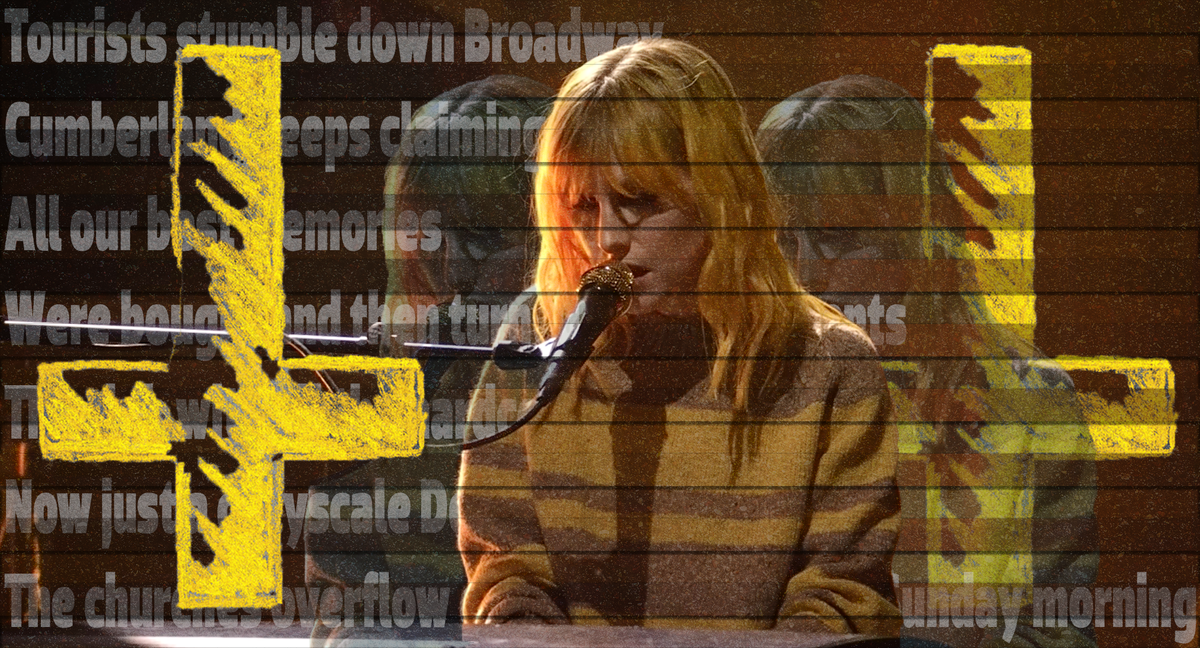
While I was visiting Nashville in early October, Hayley Williams of Paramore and solo career fame graced Late Night with Jimmy Fallon with a moving rendition of a song from her newest solo album. Williams’s October 8 performance of this song, “True Believer”, adds complexity to an already complex song. Through it, Hayley stages a critique of Nashville, the South, and those who have stolen the futures of both. She extends her critique visually, pointing to the need to confront Southern ghosts.
A video of Hayley’s performance, which you should watch (embedded below), opens with Williams playing alone under a single spotlight, her eyes closed or cast downward as she sings, even as the orchestra swells. Fellow Nashville music man Ben Folds praised this choice, saying the orchestra, "occupied their own space... They had a voice…They weren’t buried or used like a synthesizer." This somber performance is a stark contrast to Hayley's 2023 interview with Fallon as her band, Paramore, finished a first leg opening for Taylor Swift's Eras Tour.
As the camera pans around Hayley, we see that draped over the front of her keyboard is a white canvas with the handwritten message "Mississippi G-d Damn" (the title of Nina Simone's 1964 song). Williams dedicated her performance to Trey Reed, an Alabama student who was discovered dead hanging from a tree in September. In part because her note was handwritten and so directly responding to this death under questionable circumstances, Williams’ message appears unsanctioned by Fallon. Indeed, just a week before Williams's performance, Jimmy Fallon responded to Jimmy Kimmel's brief suspension by spinelessly telling CNBC's Carl Quintanilla that his own show "has never really been that political, you know."
The performance and song are haunted by lost futures never realized in Nashville or the South--a present and enduring condition that Mark Fisher calls hauntology. Hauntology, a portmanteau of haunt (like what ghosts do) and ontology (the study and ponderance dealing with the nature of being), is defined by an enduring presence of a future lost. These futures, which are often both utopic and nostalgic, sit with us and flavor our discontent with the present because of the loss they thus point towards. Hayley's performance on Fallon was deeply hauntological, a theme I'll pull out across my future posts.
Hayley, Politics, and Ego Death
Hayley Williams has always been political, but she has been more open about her views in recent years. Hayley used her band’s festival performances in the last two years to tell DeSantis voters that they would be “fucking dead to me” and denounce Project 2025. In June 2020, she gave Teens4Equality, a Nashville-based Black Lives Matter-aligned movement, control of her Instagram account for a day, giving them access to a much larger following than they had ever reached.
Hayley’s visibility, even from the early days of Paramore, the band she fronted, was political because of the male-dominated field in those early days of Warped Tour. She was a rare superstar among the crowd of bands in 2005, Paramore’s first of six showings, where she was both young and femme. Paramore's After Laughter (2017), over a decade after Warped, is an overt political engagement, which Williams told Fast Company's P. Claire Dodson was part of her journey of connecting with the "responsibility" of artists to "help push us forward and create healthy change."
Williams released her newest album, Ego Death at a Bachelorette Party, in August 2025 after releasing each song as individual singles. The title track for Ego Death leads with the line, "I'll be the biggest star at this racist country singer's bar," immediately taking a shot at Morgan Wallen, a video of whom surfaced in 2021 showing him straight-up shouting the n-word (which in turn barely dented his career of churning out extremely shallow, uninspired music). Wallen is a scourge on the legacy of the city of Nashville, as he has come to represent the worst of the commercialization of the local music scene and, in turn, has thanked the city by contributing to the hollow, mercenary honkytonkification of it by opening a six-story bar in June 2024.
Movement Through the Mourning:
Ego Death is also an album deeply enmeshed in an aesthetics of mourning. The album covers for each of the singles (and eventually for the actual album release) are black and white photos showing Hayley often bearing a neutral look, with yellow markups superimposed over the image. The mourning in her album can broadly be broken into several key themes of sad affect: those dealing with heartbreak and love lost (“Love Me Different”, “Whim”, “Parachute”), those dealing with depression and alienation (“Glum”, “Mirtazapine”, “Disappearing Man”, “Negative Self Talk”), and those dealing with the disorienting position of femininity (“Kill Me”, “Hard”).
These deeply sad songs exude what another great Southern writer, William Faulkner, once lamented: "The past is never dead. It's not even past." This emotional viewpoint runs through all of these songs, bringing a particular pathos to the album that really comes to a head in "True Believer," her 13th track, which fuses salient political critique with the emotivity of lament.
“True Believer” (in a Series of Essays)
"True Believer" is Ego Death’s pivotal song of mourning; it's a call to action, and it's a cutting critique. Hayley criticizes Nashville gentrification, decries the enduring power of a perverted Christianity, and calls for a reckoning on the haunting legacies of the South. Other writers (1, 2, 3, 4, 5) have noted these themes, which several essays I’m sharing over the next month push further by connecting Hayley’s lyrics and arrangement to Nashville’s urban form and the hauntological aspects of living in the contemporary South.
In the coming weeks, I’ll build out the following mini-essays about “True Believer”, which I believe to be still an underrated song from the album. The first verse of the song structures these essays, setting up themes that Hayley continues throughout the song:
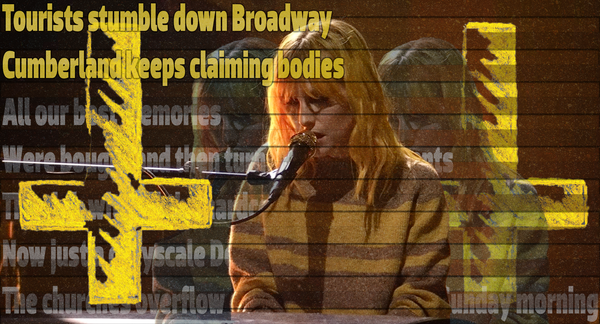
Tourists stumble down Broadway
Cumberland keeps claiming bodies
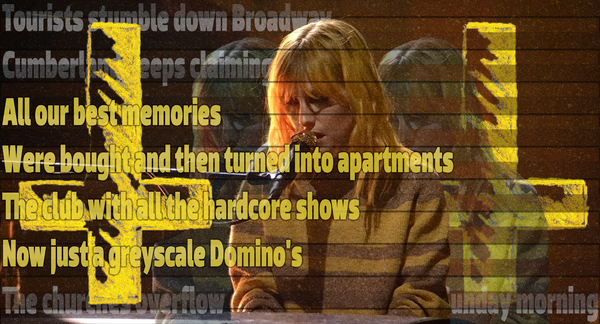
All our best memories
Were bought and then turned into apartments
The club with all the hardcore shows
Now just a greyscale Domino's
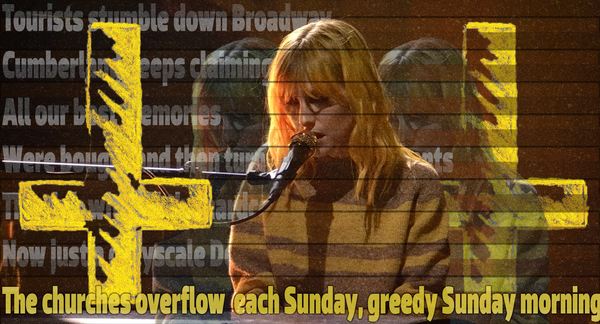
The churches overflow each Sunday, greedy Sunday morning
Table of Contents for Essays
If there's a specific essay of interest to you, you can find it below. I'll update the copy here to include links to the essays as I write them.
From the first two lines: Death and Tourism
 hampton.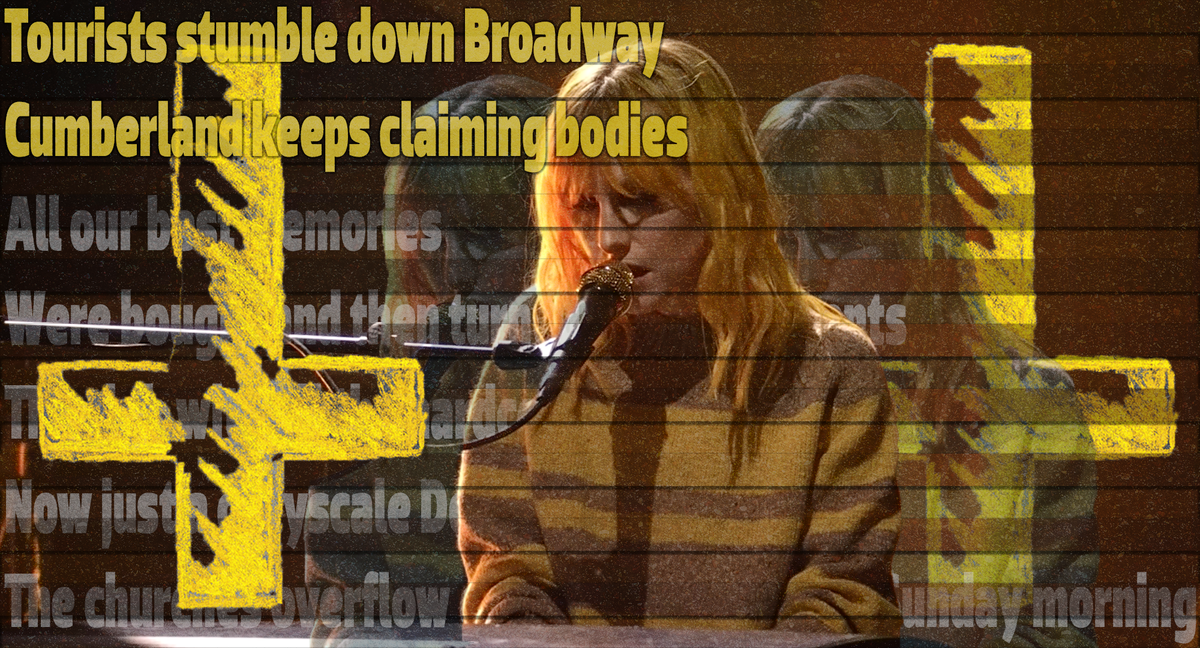
From lines 2-5: Acid Nashville and Post-Neoliberalism
 hampton.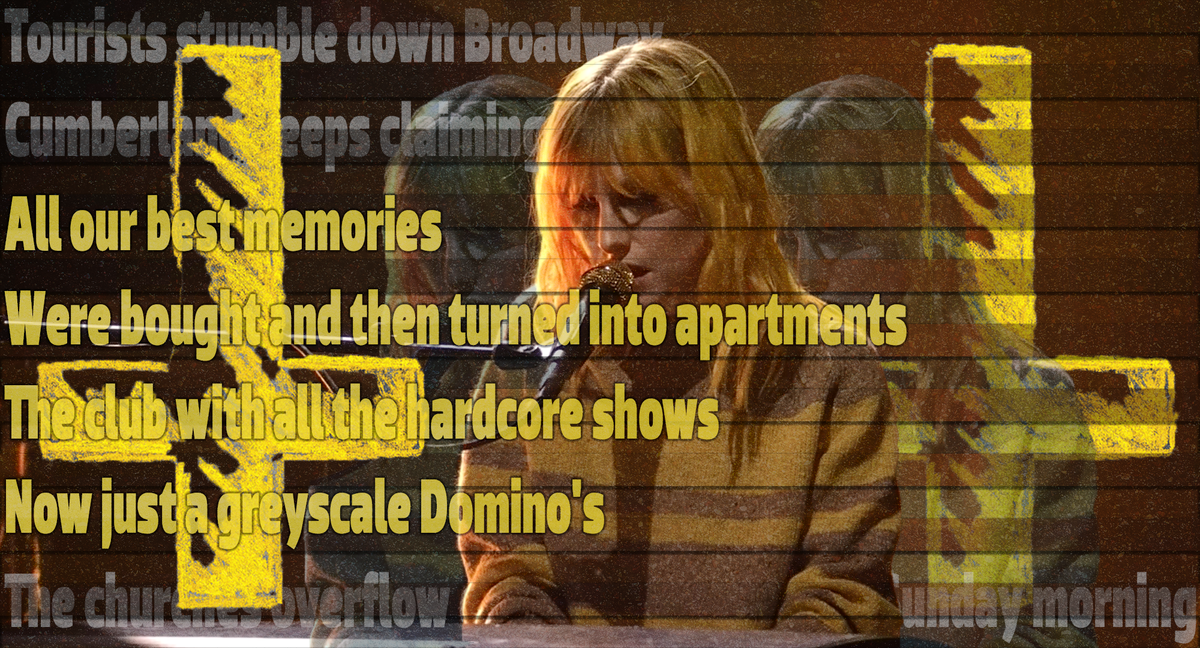
From the final line: The Unholy Trinity
 hampton.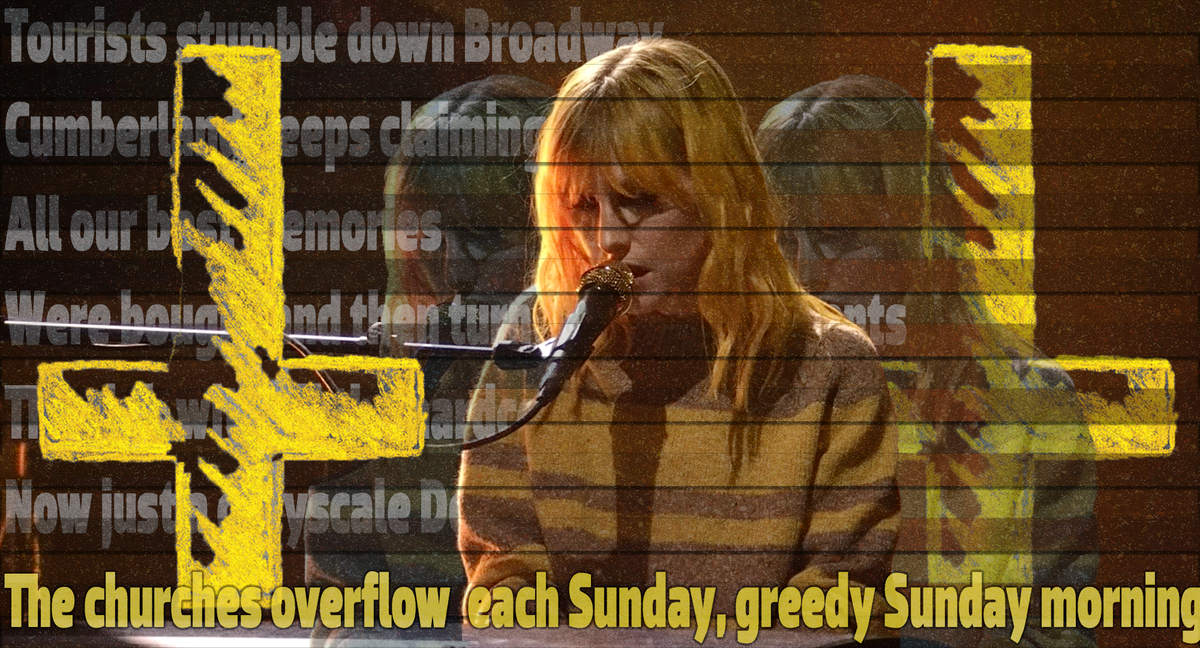
Stay tuned and consider subscribing to this blog as a newsletter to get these posts directly in your inbox:
Thanks to AC, DM, and RO for their thoughtful comments on earlier drafts of this series of posts. All mistakes are my own.