Reanimating the Bones 4: The Unholy Trinity -- Guns of the Father, Sins of the South, and the Haunting Spirit of White Supremacy
Hayley Williams's "True Believer" performance on Jimmy Fallon's show was a force. This last of several essays examines some of Williams's laments and hopes for the South.
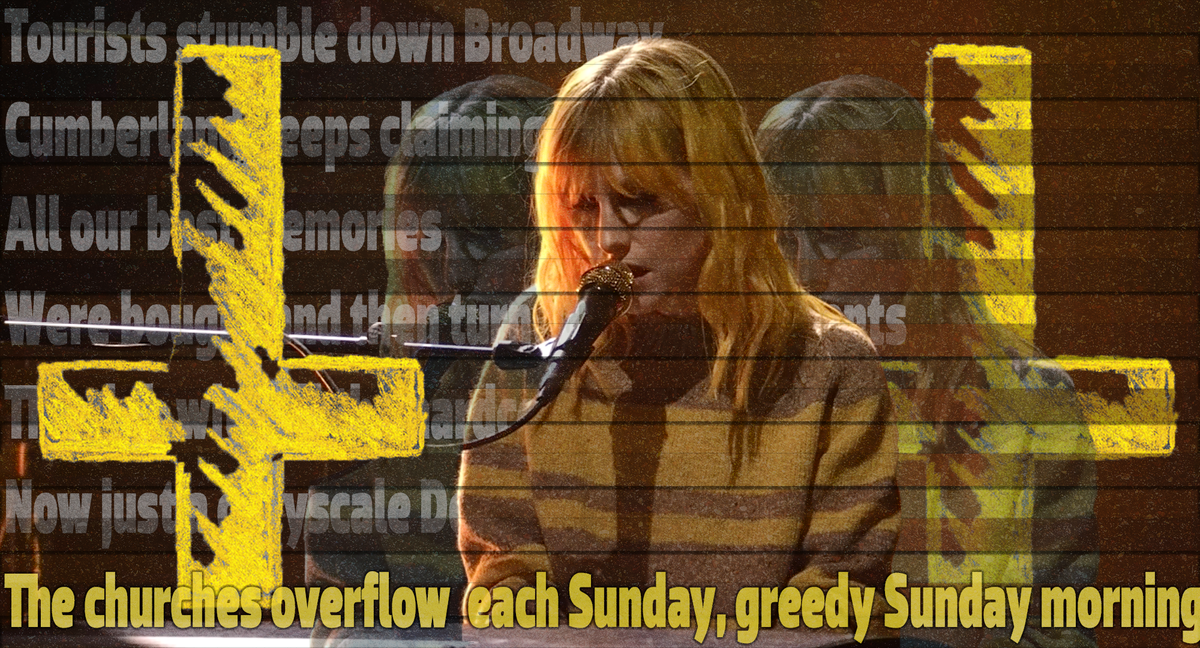
This is the fourth mini-essay analyzing some of the lyrics and arrangement of Hayley Williams’ “True Believer,” a song from her newest solo album Ego Death At a Bachelorette Party, which she performed on Jimmy Fallon’s show in early October 2025.
The jumping off point for this essay are the last line in her first verse:
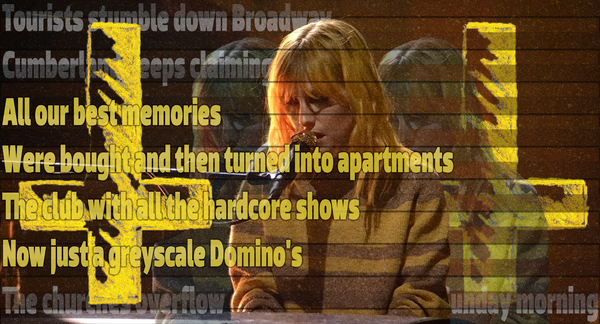
The churches overflow each Sunday, greedy Sunday morning
Which is followed by a pre-chorus immediately after:
Gift shop in the lobby
Act like God ain't watching
Kill the soul, turn a profit
If you’d like to read the introduction post to this series of posts, I wrote an intro you can read here:
 hampton.
This blog post focuses on Hayley's critique of Christian greed, under capitalist politics in Nashville and beyond, as it arrives within her arrangement of “True Believer.” She points to the hypocrisies of religion for greed and ponders the spiritual cost of such a program, which I aim to unpack below.
Christian Hypocrisy and the Guns of the Father
Critics of Christian profit-seekers (myself included) often repeat Mark 10:25, which reads, “It’s easier for a camel to squeeze through the eye of a needle than for a rich person to get into the kingdom of God.” Williams spends several lines very early in her song to call out such perverse priorities, marking its importance for her in Nashville’s context. Hayley’s callout that Christians “kill the soul, turn a profit” connects to her critique that all this profit costs the corruption of one’s soul, but she also connects it to the South and then makes it specific.
In her second verse, Hayley sings these three lines before her second pre-chorus:
They pose in Christmas cards with guns as big as all the children
They say that Jesus is the way, but they gave him a white face
So they don't have to pray to someone they deem lesser than them
Her critique of the hypocrisy of Southern Christian sensibilities continues as she measures children in Christmas cards against the guns that compete with them for attention. And indeed, in 2022, Tennessee legislator Andy Ogles sent out an extremely fucking weird Christmas card that included all members of his family (except his youngest) wielding AR-15-style rifles in front of a Christmas tree. Just months later, a shooter killed half a dozen people at a school in Ogles's district. Naturally, he offered "thoughts and prayers".
There isn't much to say on her last two lines here that hasn’t already been said, as her meaning is quite clear: the whitening of Jesus serves white supremacy, which is endemic in contemporary Christian practice in white communities across the South. Dr. Anna Swartwood House has written about some of the history of how Jesus came to be white, much of which had to do with European empire, anti-Semitic myths in Italy, and symbolically presenting power.
Tilling the Roots: A Call to Action
In her second pre-chorus, Hayley offers four lines that point to the real overarching theme of “True Believer”:
The South will not rise again
'Til it's paid for every sin
Strange fruit, hard bargain
Till the roots, Southern Gotham
Hayley leads this pre-chorus by inverting the neo-Confederate call to Southern resurgence, instead saying the South's ascendance remains hindered until it reckons with the heritage of racism, violence, and capitalist exploitation. She also name-checks Billie Holiday’s 1939 song, "Strange Fruit"--the orchestra plays out this Fallon performance with the melody from Holiday’s mournful song as Williams cedes the stage, pointing to the fact that the past’s wrongs have yet to be rectified and still endure.
Hayley's nostalgic invitation to "till the roots" is an urgent call to severing. Hate and heritage grow like kudzu, and uprooting these weeds requires relentless labor. Only through this tilling of the roots can we create space to seed a new South, one flourishing with the abundance of equity and justice.
Despite Hayley’s critique of the powerful, the hateful, and the violent, “True Believer” comes from a place of love tinged with the hauntological, as described by Mark Fisher in the haunting of the present by lost futures. She mourns a lost Southern future (exemplified by Nashville) yet vows to "reanimate your bones," conjuring up a better future from the past’s corpse.
This is a song that deploys the generic forms of a heartbreak love song, a style that Hayley Williams has showcased across this masterpiece of an album, while also offering a spatial elegy--through the frame of heartbreak, we also mourn the ways our hometowns have changed under neoliberalization’s mantra that nothing is sacred and everything is for sale. That grief, as Hayley braids it with rage and urgency, lands as an emotional gut punch that the visuality of her Fallon performance only accentuates further.
Hayley Williams is truly the voice of a generation of Southerners. On Fallon--a corny late-night host’s show most known as the stage of safe, suburban banter--Williams stages an exorcism instead of playing one of her more popular songs. Every choice--the orchestra’s role, the Simone and Holiday references, the refusal to meet the audience's eye--constructs a critique of Southern heritage and hate through mass art. “True Believer”, as composed here, becomes more than a song on late-night television. Instead, it’s a manifesto for what a divined, cleansed, and reanimated South could still yet become.