Retrobaiting Azeroth: Notes from a conference paper

This blog post is a companion piece for a paper I presented at a conference in February (which I am working to publish in a journal in the coming year).
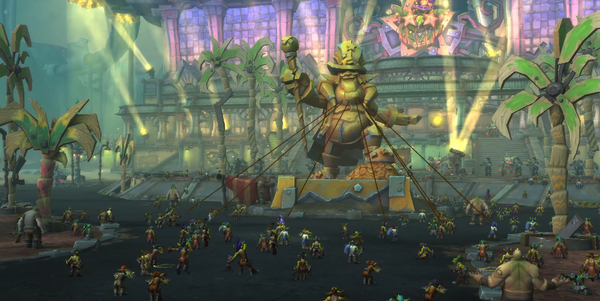
Nostalgia is a contested space, including in and around World of Warcraft, a video game that has been running for over two decades. Blizzard (the developer of World of Warcraft) deploys retrobait to entice lapsed players and keep player subs active. Others (like those running private servers and fan creators) counter-narrate their own versions of nostalgic Azeroth. Sometimes this is a faithful reproduction of the game (as Blizzard has aimed to reproduce), and other times these versions are deeply speculative. Players find themselves caught in the middle between all of these nostalgic claims and act as an audience (and consumer base) whose attention, data, and emotions become currency.
I frame my paper argument around three “shards”:
- Market Forces + Retrobait
- Technics + Game Design
- Hauntology + Nostalgia
shard 01: market forces + retrobait
Since the fan push around a private server called Nostalrius (which shut down and then had a player petition), Blizzard has learned how to better repackage memory in their advertising. Classic launches, expansion (re-)re-releases, and seasonal 'remixes' are part of Blizzard's PR strategy to monetize novelty through the allure of the past. However, this retrobait is contested. Those involved in illicit services around WoW (gold selling, character boosts, private servers) also produce their own retrobaiting content, weaponizing these same feelings of a 'lost' WoW. Nostalgia here begins to operate as a form of governance: whoever sets the terms of the ‘good old days’ of WoW steers where fans virtually congregate, defines which stories are ‘official,’ and determines who captures the revenue, labor, and data of players.
shard 02: technics + game design
Shard two covers the technical systems of Retail WoW, which increasingly runs on a configuration of overlapping and rotating daily, weekly, and other time gated objectives. Blizzard has calibrated this quest regime around measuring player engagement, creating a mountain of chores each Tuesday reset. The metrics behind Blizzard’s quest regime transforms play into metrics the corporate actors at Microsoft/Activision/Blizzard can boast about to their shareholders, but it also changes how interacting with the game feels. On one hand, players feel nostalgic for an older, messier, more social past progression system. On the other hand, Blizzard has injected nostalgic content (usually in the form of returning characters or references to older quest lines) in an attempt to exchange nostalgic feelings for player engagement data. Nostalgia then becomes a currency, acting as a something the developer can exchange to offset the cost of that measurement.
shard 03: hauntology + the Classic+ problem
In recent years, you can stand inside three Azeroths at once:
- Retail: the present
- Classic: a curated return to the past
- Classic+: a lost future—what could have been if the design tree had branched a different way
Private servers pioneered 'Classic+' by adding new features onto assets lifted from Blizzard, including new class roles, lore-adapted map expansions, and alternate routes for gearing. Blizzard, ever the absorber of others’ ideas, has responded by rolling out official experiences that rhyme with those experiments. The result is a haunted timeline: past (Classic), present (Retail), and speculative(/lost) future (Classic+). Each of these experiences has an eerie effect of making the others feel somewhat incomplete. The uncanny hauntological textures of modern Warcraft(s)--the sense that another, better timeline is just off-screen--has only gotten more disorienting as Blizzard has crammed nearly a dozen content releases into the last year and a half. But this haunting keeps the market open by keeping the feeling of what might have been nearer, leaving player nostalgia unresolved and aching with desire.
complications of a contested nostalgia (a conclusion)
Who controls Warcraft’s nostalgia is part of my inquiry here. Do corporations with larger server space, capable art direction teams, and confident lawyers control WoW nostalgia? Is it fan developers with boundless creativity and a loyal Discord following? Is it streamers with an unending river of hot takes and microcontent? The fight isn’t merely cultural, it’s infrastructural: influenced by content release schedules, monetization hooks, and legal takedown notices. It’s also a deeply rhetorical process, as memes, release trailers, player news updates, and trope-laden writing all influence how nostalgia is performed and instrumentalized online.
A few key concluding thoughts:
- Retrobait is plural. Blizzard doesn’t have a monopoly on yesterday, they just often have slicker packaging and sharper legal teeth. Fans and private servers weaponize the same sentiment (sometimes more convincingly) but on much smaller budgets and with slimmer teams.
- Metrics shape memories. Retail data regimes change what we, as players, remember wanting and enjoying. When time feels sliced into dailies and weeklies, the “good old days” become another dragon for us to chase.
- Our ghosts keep us logging on. Classic, Retail, and Classic+ aren’t just a menu, they are a Möbius strip, whereby the friction between each game version generates a cycling desire that sustains the whole configuration.
I’m skeptical of how institutions borrow aesthetics and affect (including nostalgia) to launder power. Nostalgia can help us remember community but it can also distract us from the extraction happening in front of us (and through us). In Azeroth, like anywhere else online, we should ask: who serves to benefit when the past is trending?